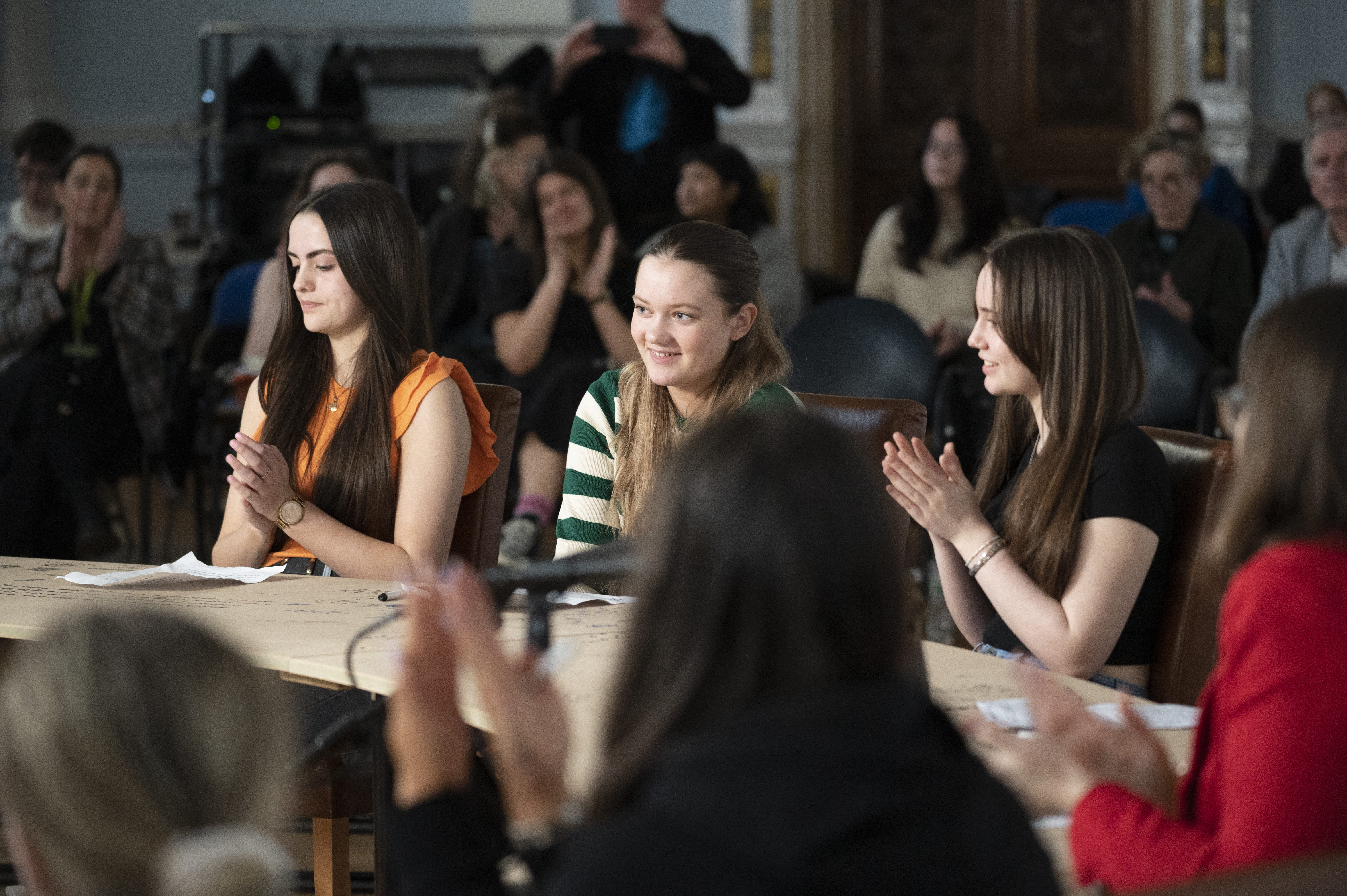
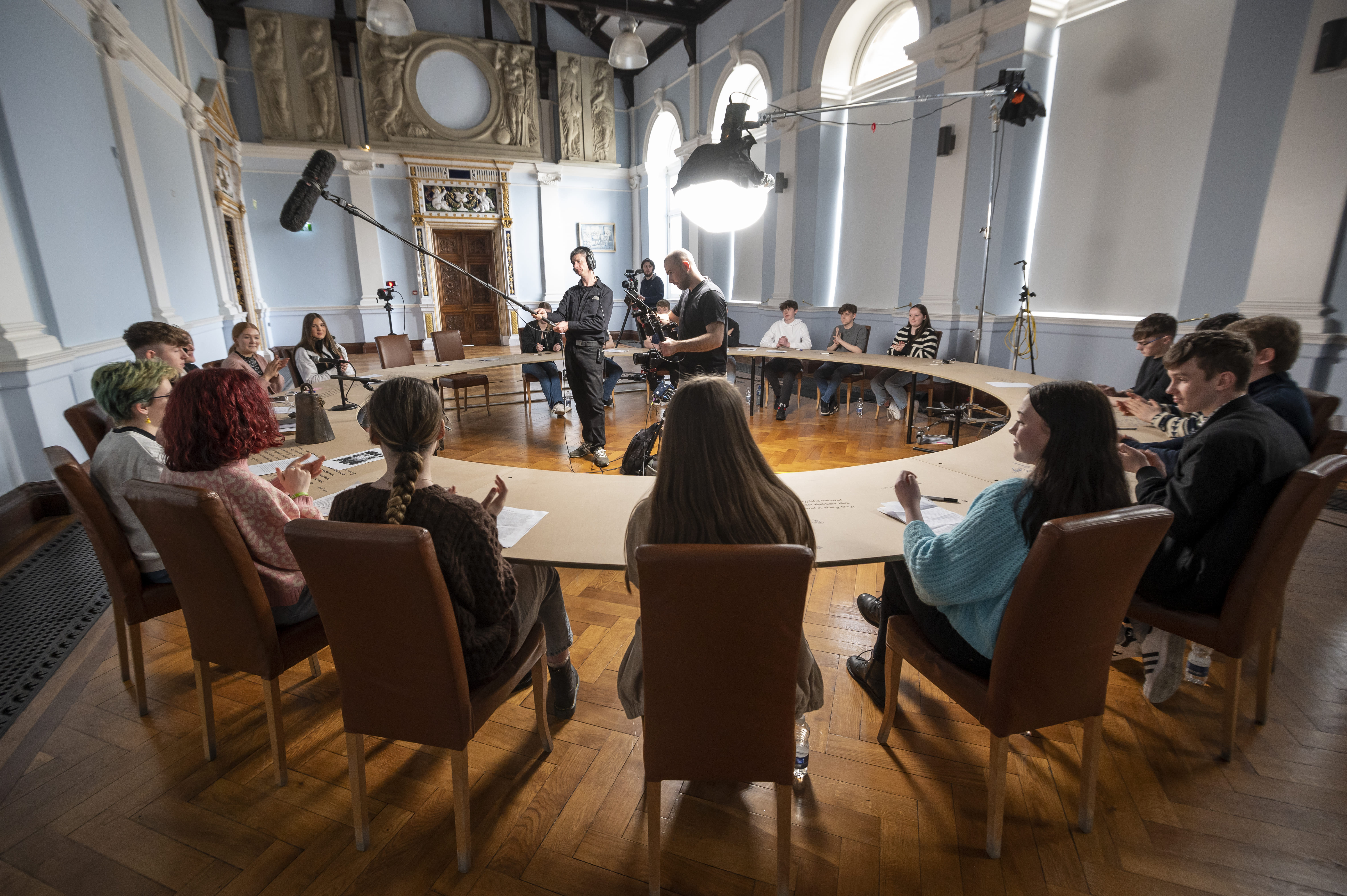
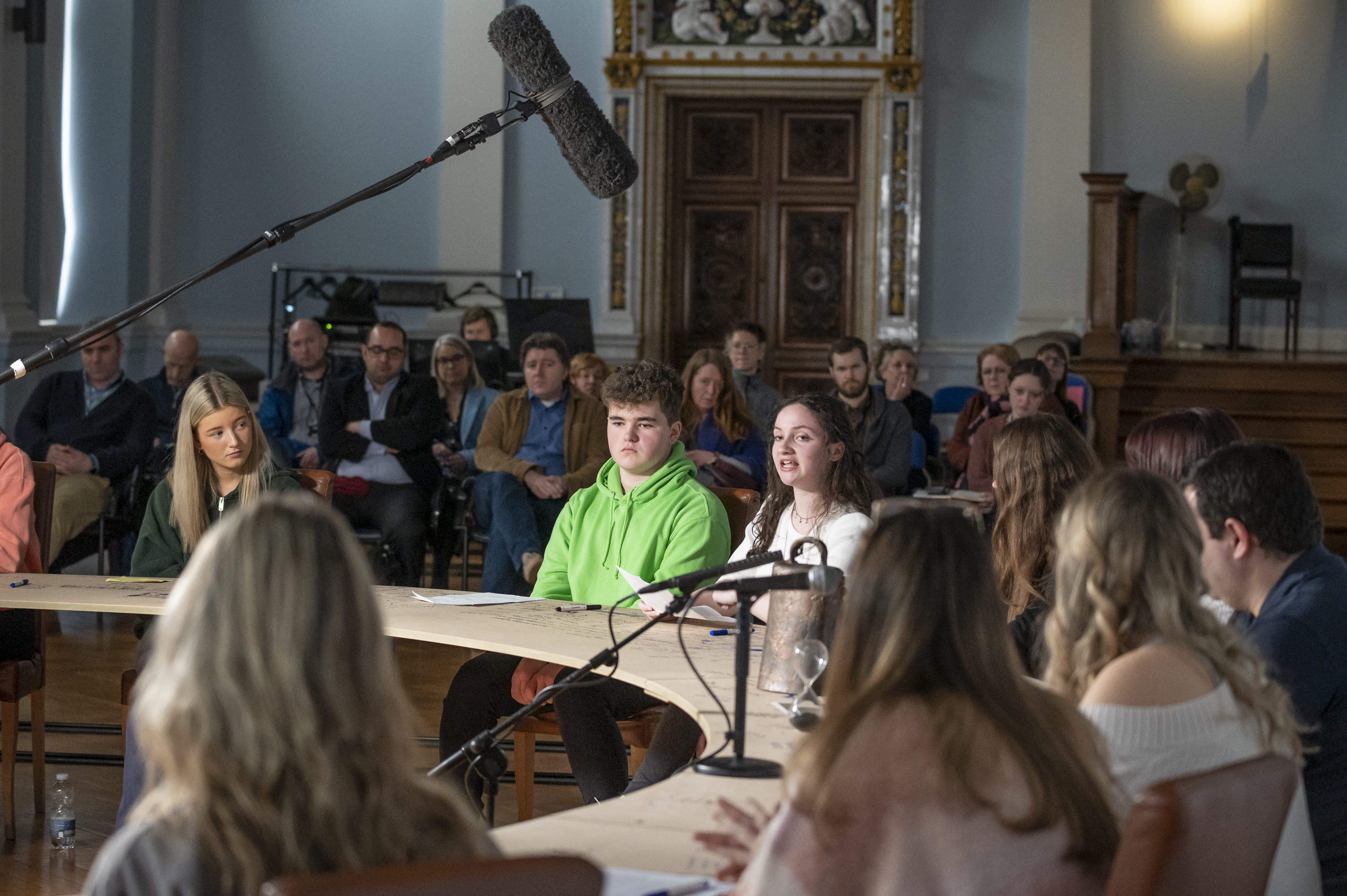
The Young People’s Assembly took place over three days, 29–31 March 2023, in the Ceramics Room of the National Museum of Ireland – Archaeology, Kildare Street. Conceived as the Decade of Centenaries drew to a close, the project created a space in which young people could reflect on the layered histories of the island of Ireland, while also articulating their hopes, anxieties, and demands for the future.
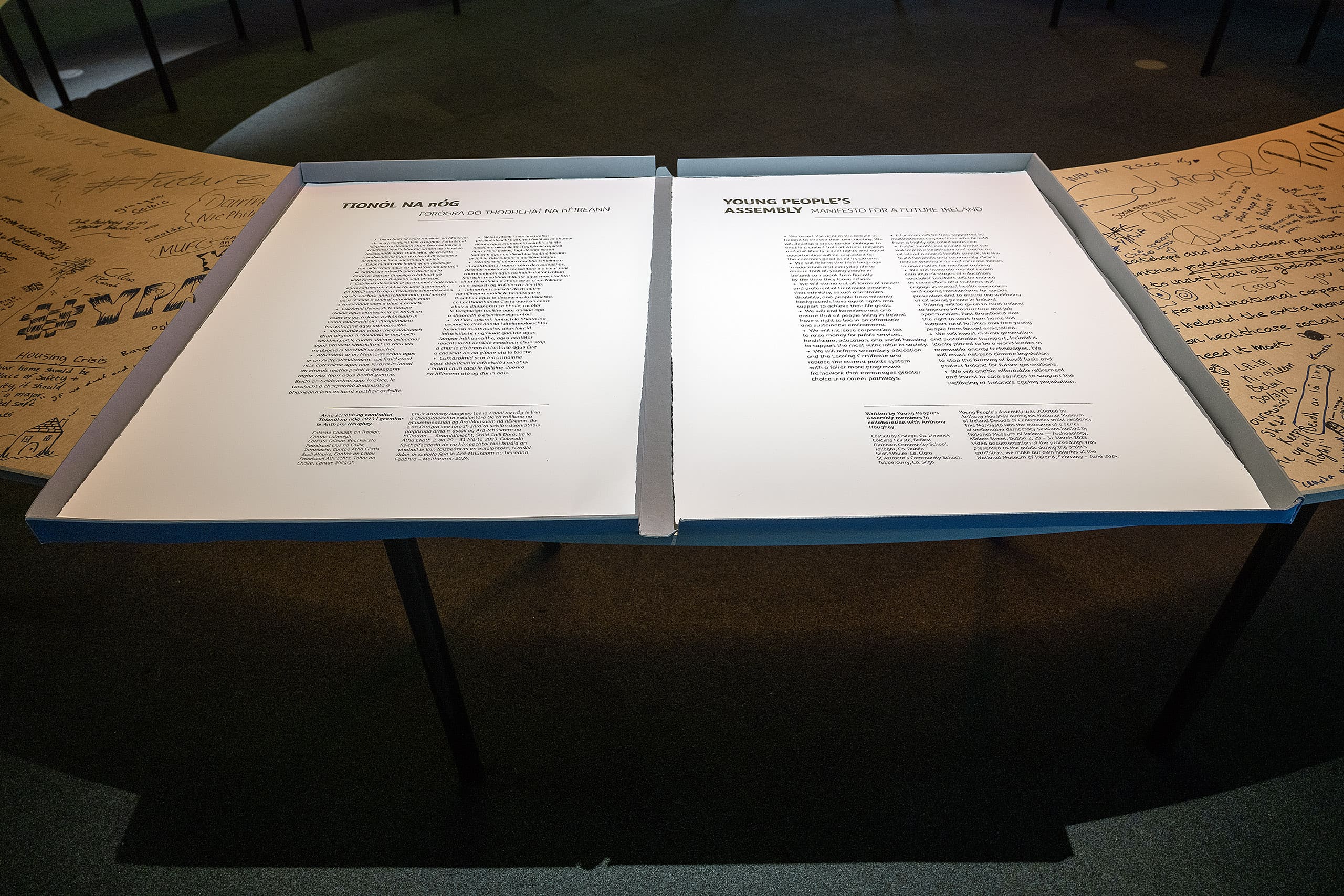
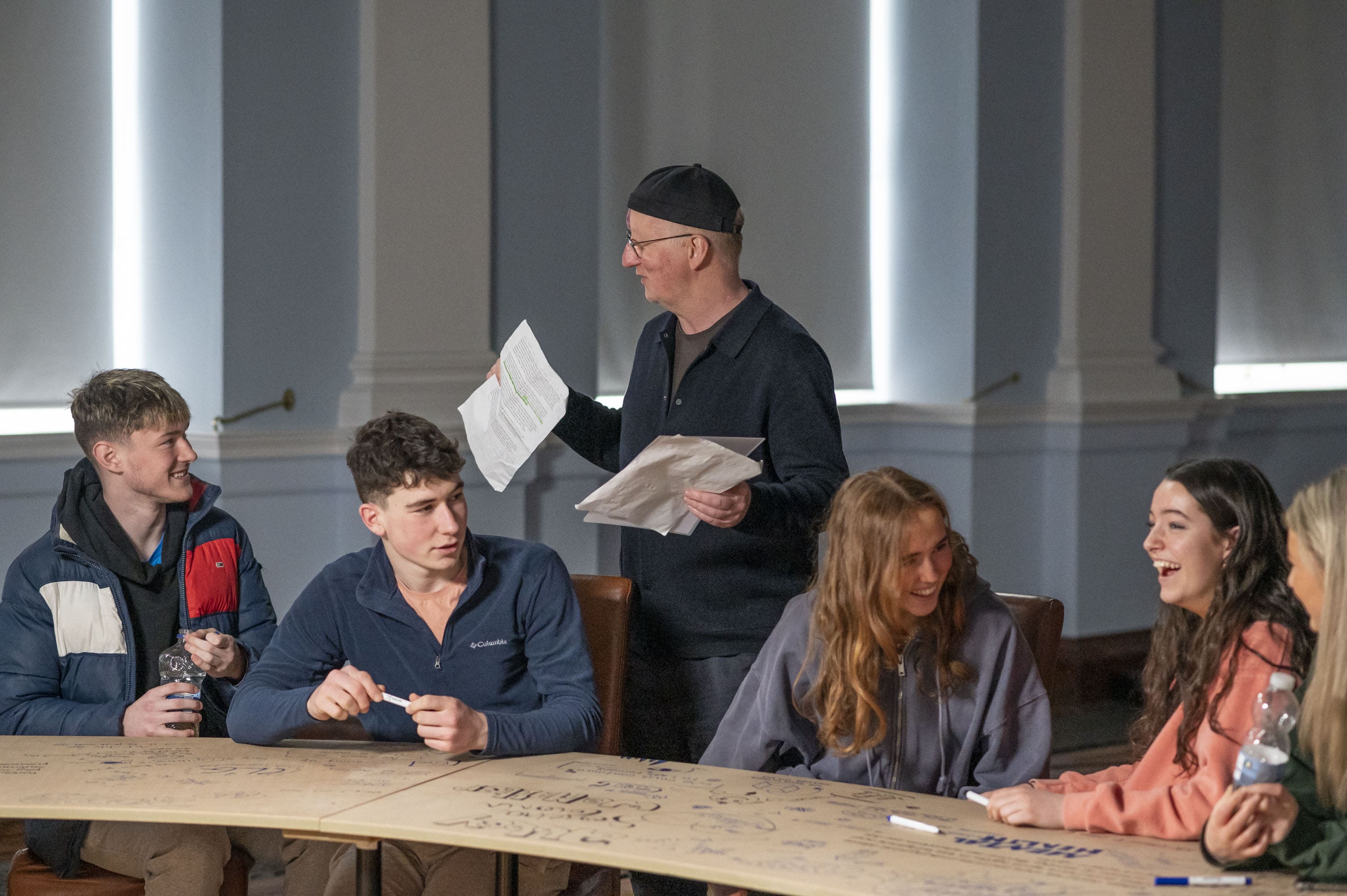
Across a series of preparatory workshops, students from five secondary schools, Scoil Mhuire Ennistymon (Clare), St Attracta’s Community College (Sligo), Oldbawn Community School (Fingal), Coláiste Feirste (Belfast), and Castletroy College (Limerick) gave voice to the issues shaping their lives. These ranged from questions of identity and constitutional futures to the everyday realities of healthcare, mental health provision, housing and homelessness, emigration, and social justice. Fragments of these conversations were inscribed onto a custom-made circular table seating twenty participants, transforming the furniture of debate into a physical record of collective thought.
The Ceramics Room carries its own recent political memory. Between 2017 and 2019 it served as the temporary home of Seanad Éireann, a site of deliberation relocated within the museum while the Seanad Chamber in Leinster House was under refurbishment. Within this charged setting, students elected ‘Ceann Comhairles’ from among their peers to guide discussion and hold the space as debates unfolded around climate change, direct provision, the rise of the far right, suicide awareness, social media, housing, healthcare, and the Irish language.
Each assembly opened with a keynote address by invited historians and cultural commentators, who connected past struggles to present conditions and emerging futures. Contributors included comedian and Traveller and LGBT+ rights advocate Martin Beanz Warde; historian and archaeologist Laura McAtackney; journalist and writer Flor MacCarthy; Gaeilgeoir historian Síobhra Aiken; and Dublin City Council historian Cormac Moore.
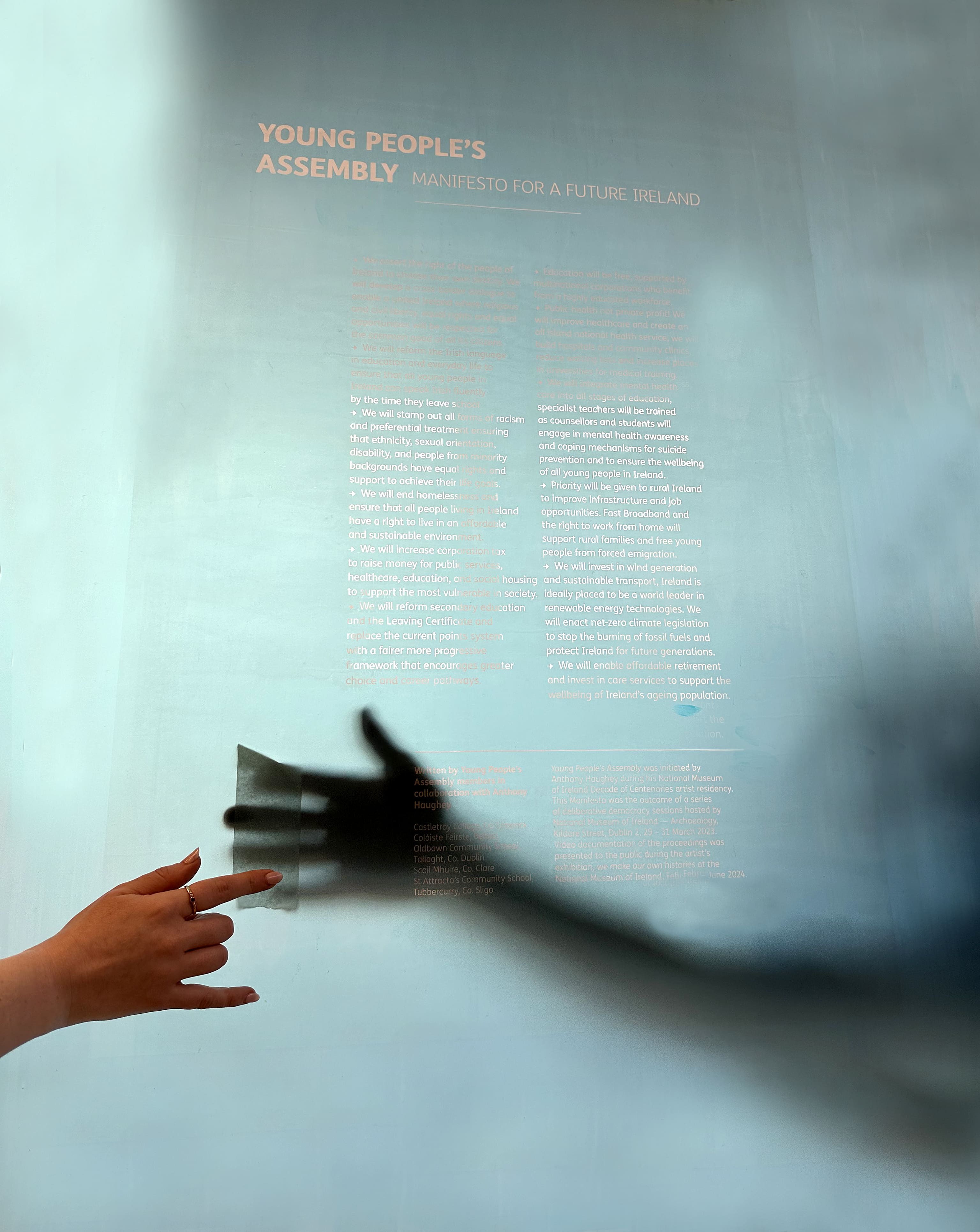
A key outcome of the assemblies was the creation of a manifesto for a future Ireland – imagined as an egalitarian republic for all. Emerging through collective discussion and debate, the manifesto remains deliberately unfinished, plural, and provisional, holding open the possibility of an Ireland yet to come. The manifesto was realised both as a silkscreen print and as a published text, circulated throughout the exhibition. Each editioned, hand-printed manifesto now hangs in the participating schools and within the National Museum collection, functioning as a material trace of the assemblies and a quiet reminder of the future-making potential carried by coming generations.