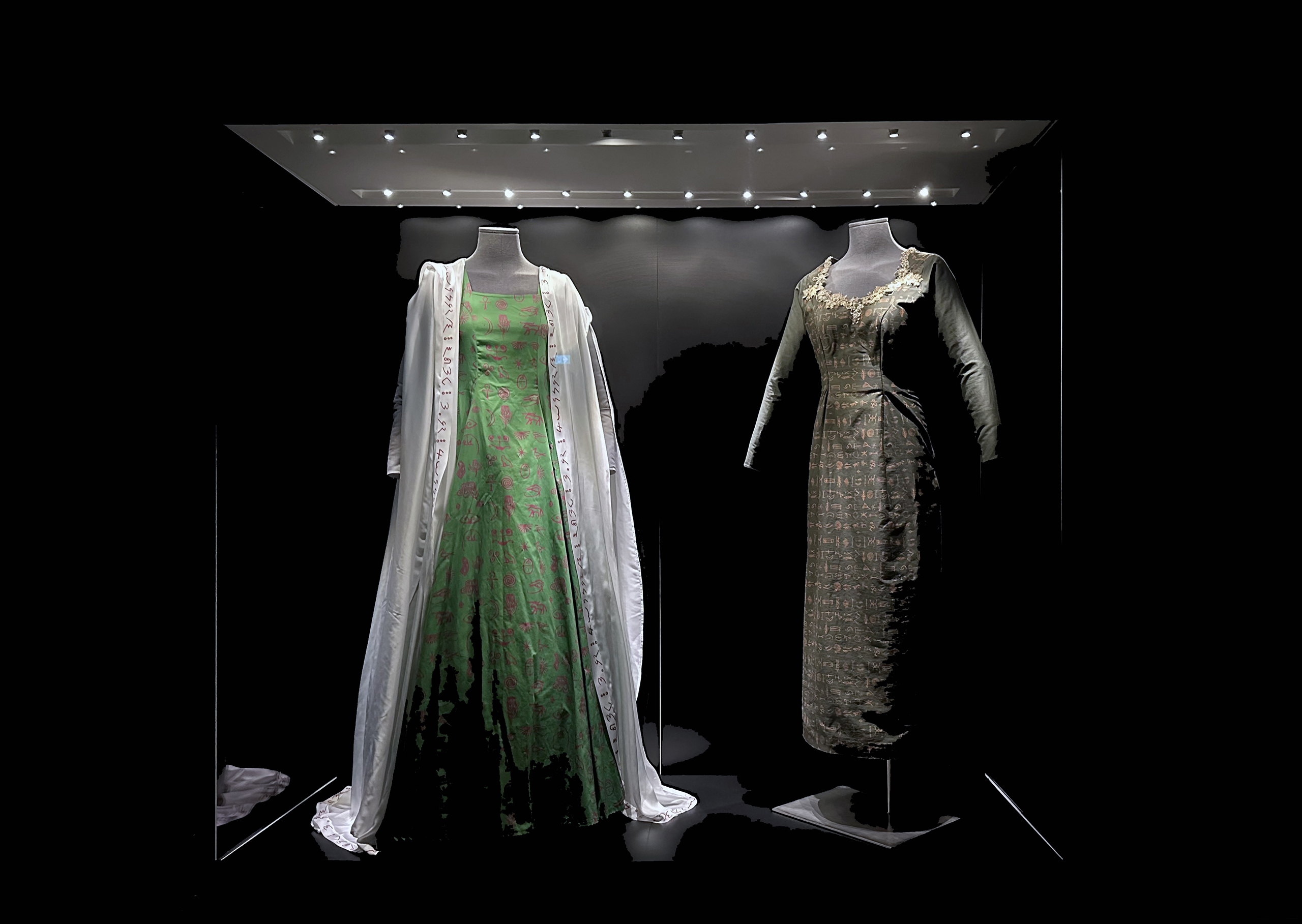
A Dress for Akunma is a collaborative project developed by the Global Migration Collective in partnership with the Nwanne Diuto African Women’s Group, artisan dressmaker Grace Emuaga, fashion designer Blaithnaid McLean, and National Museum of Ireland Decade of Centenaries artist-in-residence Anthony Haughey. The project takes its point of departure from the National Museum of Ireland’s permanent exhibition The Way We Wore, which presents clothing and jewellery worn in Ireland from the 1760s to the 1960s and critically examines dominant narratives of Irish dress.
Dress for Akunma explores the convergence of African and Irish cultural traditions through collaborative making, using dress as a site through which questions of identity, migration, and belonging are negotiated. The project foregrounds lived experience and collective authorship, prompting reflection on how the National Museum of Ireland’s collections might more fully represent the diverse cultural realities of contemporary Ireland.
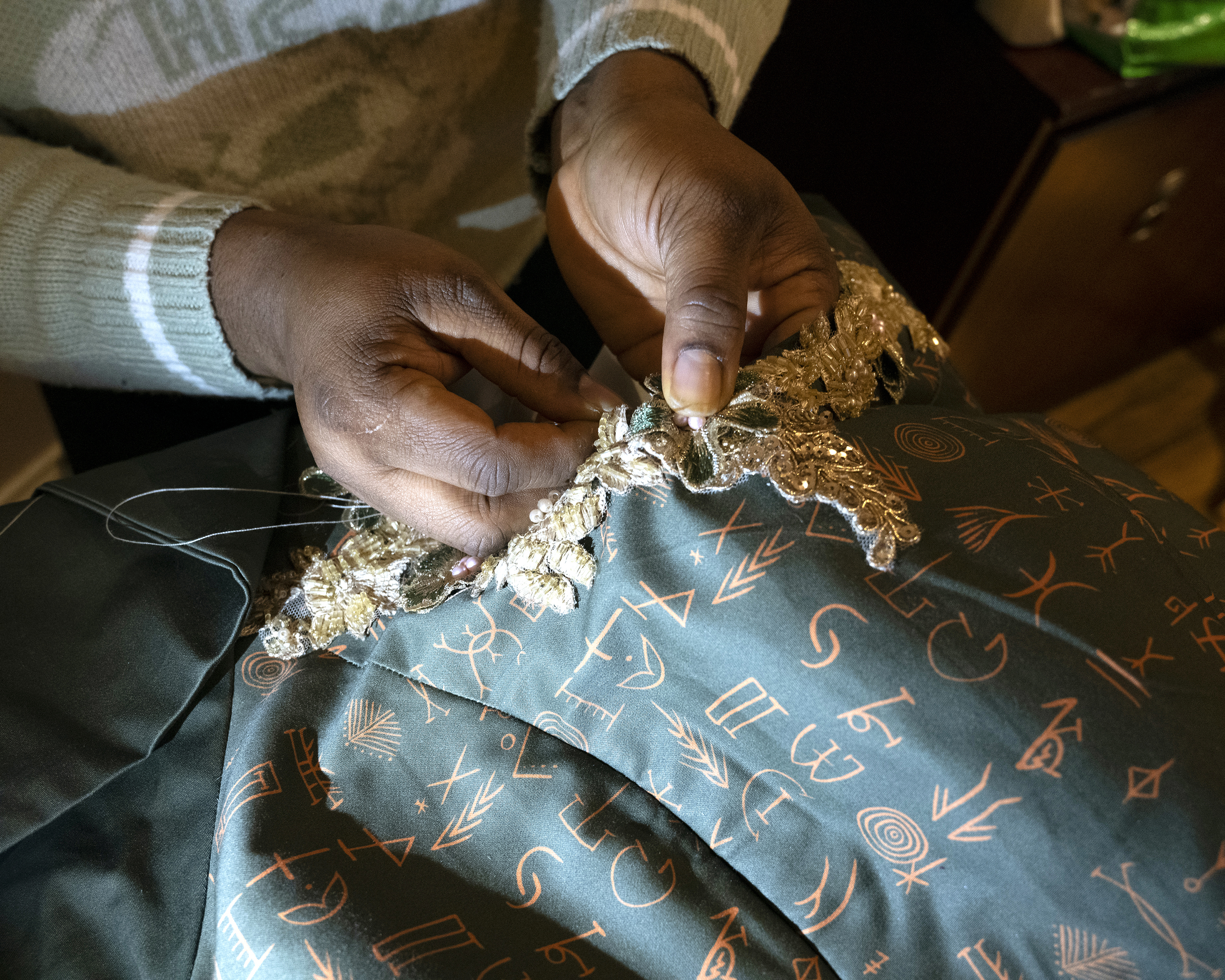
Founded by Anthony Haughey, Lauretta Igbosonu, and Warsame Ali Garare in 2005, the Global Migration Collective has worked with migrants internationally and, since 1999, particularly with asylum seekers and refugees in Ireland. Through collaboration with the Nwanne Diuto African Women’s Group, the Collective sought to create a garment that reflects African-Irish cultural identity while initiating dialogue around cultural visibility, authorship, and representation. Drawing on the specialist skills of Grace Emuaga and Blaithnaid McLean, they developed a unique dress that bridges these two cultural traditions.
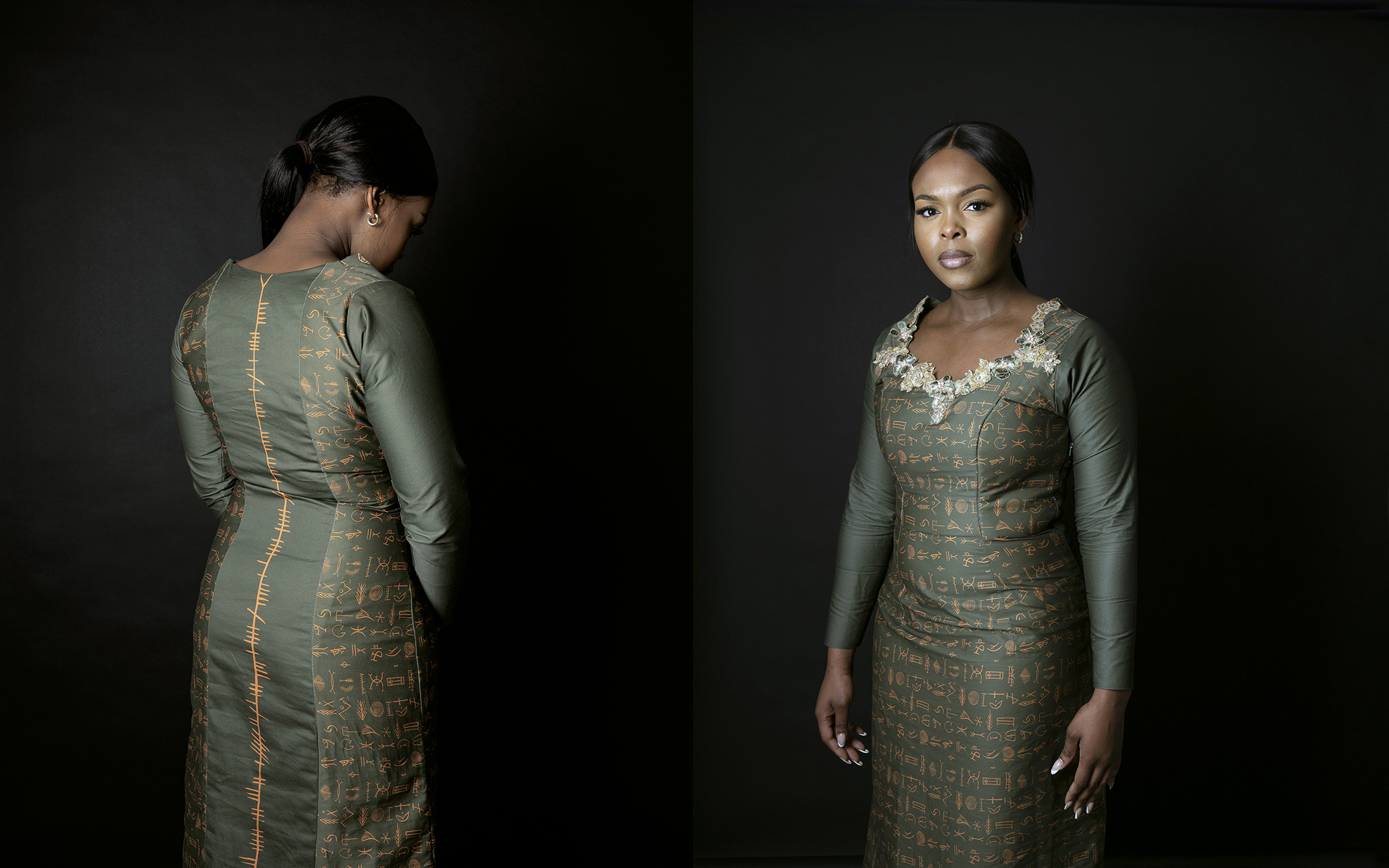
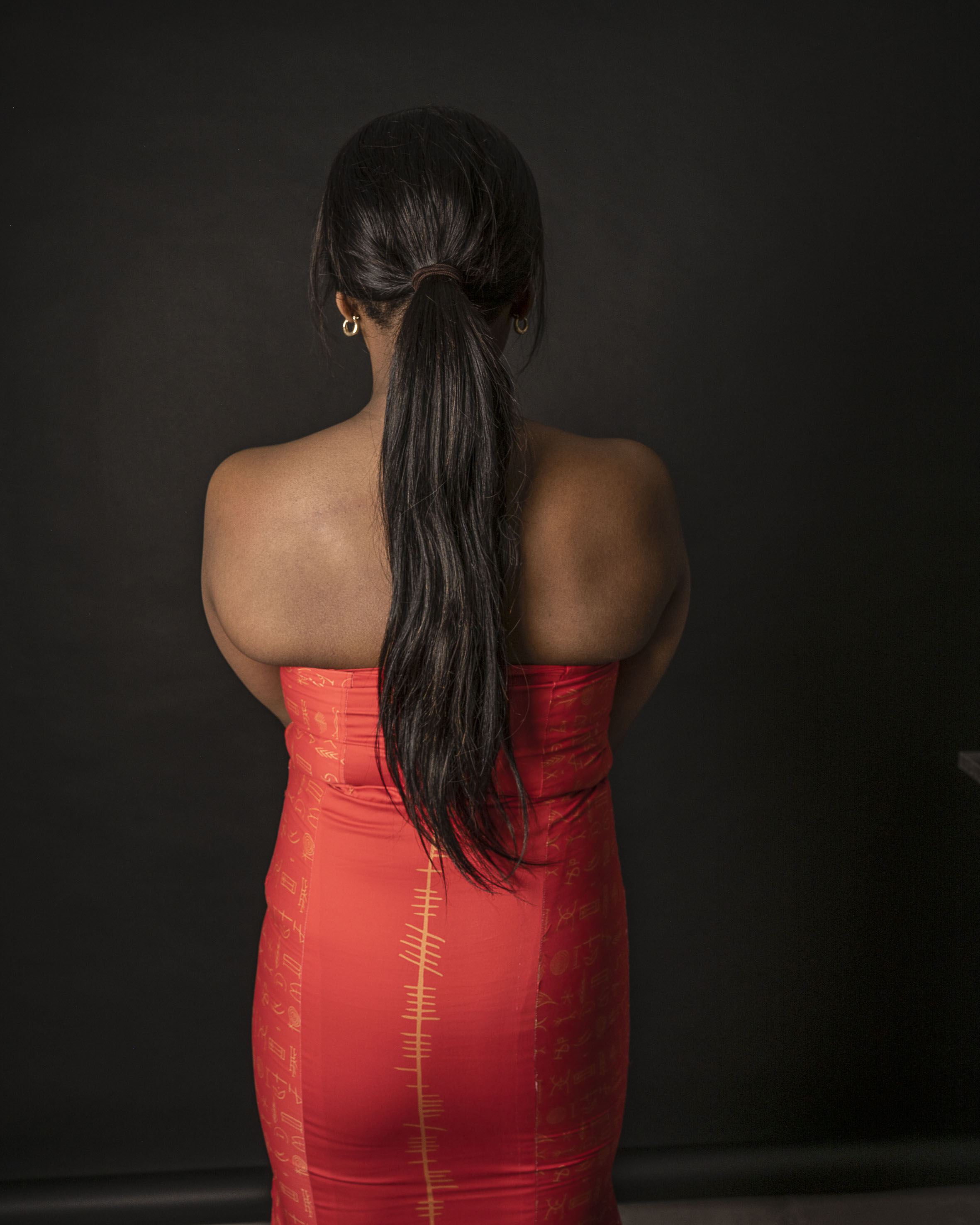
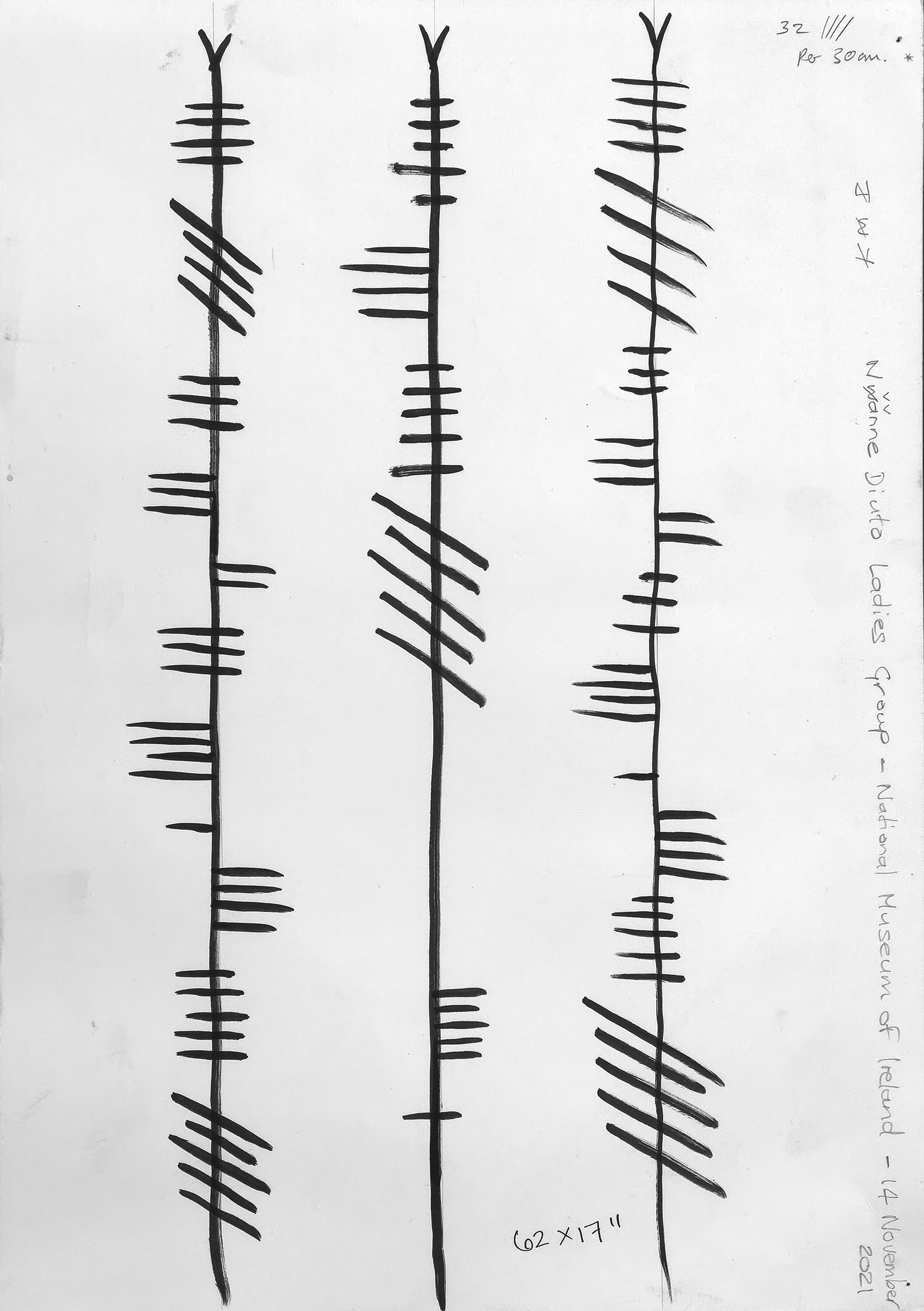
The research and development phase included a visit to the National Museum of Ireland – Archaeology on Kildare Street, where the team explored the Ogham alphabet, the earliest documented form of writing in Ireland, dating from the 4th century AD. They examined Celtic markings and symbols found on historical artefacts within the collection. Traditionally carved on standing stones, Ogham consists of a series of linear strokes arranged along a central edge line. The inscriptions were typically read from bottom to top and left to right, continuing onto another face of the stone when required.
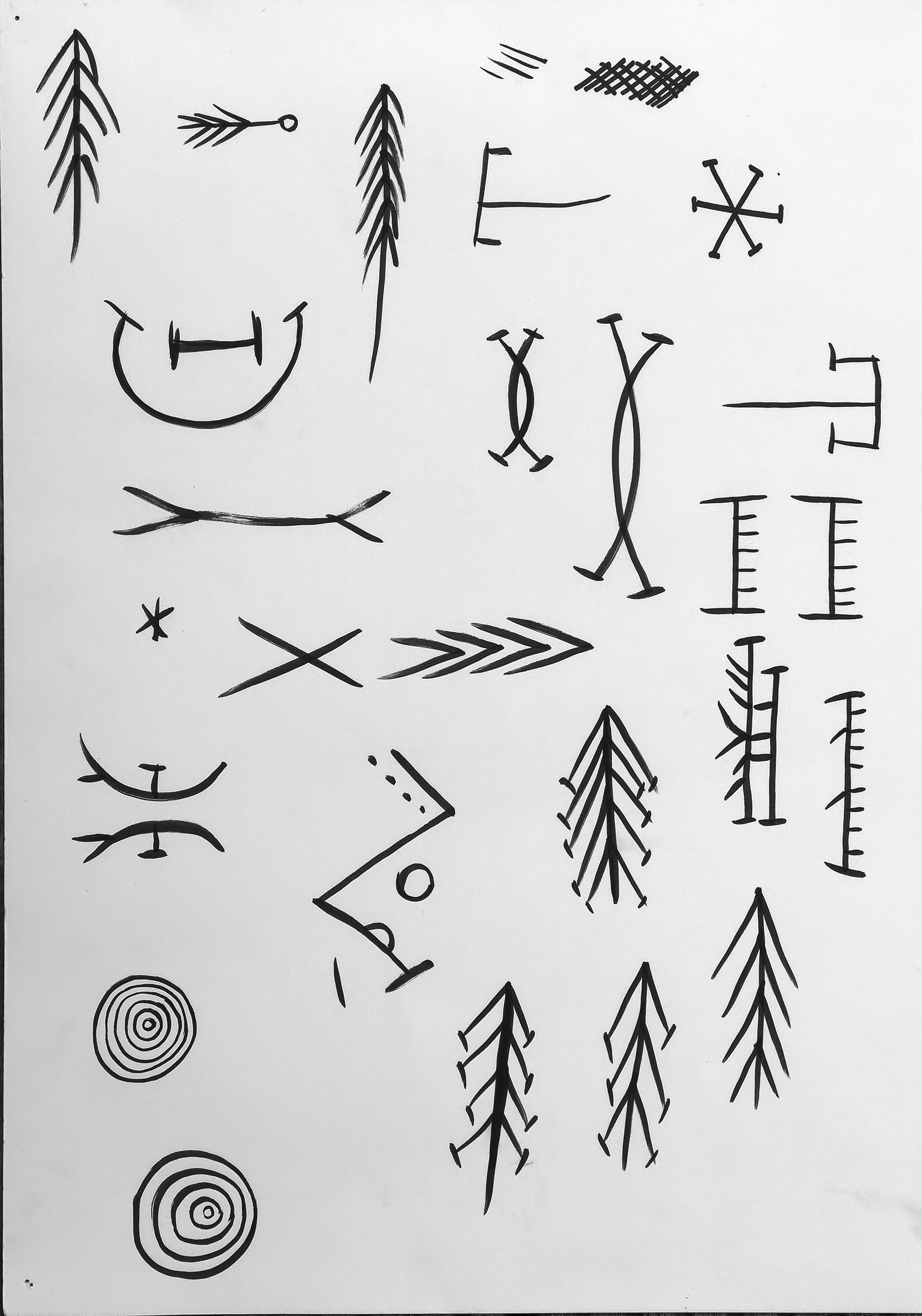
Alongside this, the team researched Nsịbịdị, an ancient graphic communication system originating among the Igbo and neighbouring cultures of southeastern Nigeria, the region from which members of the Nwanne Diuto African Women’s Group originate. Believed to have been in use since around 400 AD, Nsịbịdị does not correspond to a single spoken language. Instead, it is an ideographic system in which symbols represent actions, ideas, and abstract concepts, allowing communication across linguistic boundaries. With hundreds of documented symbols, Nsịbịdị has been expressed through gesture, drawing, body marking, architecture, masks, and textiles.
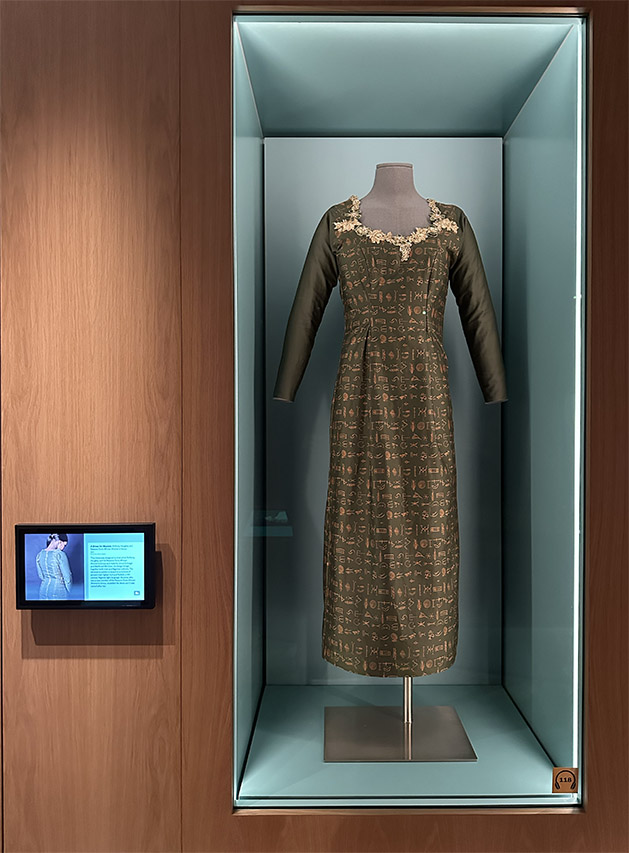
To visually and conceptually connect Ireland and Nigeria, the dress integrates both Ogham and Nsịbịdị symbols. Their combination offers a symbolic framework for imagining cultural coexistence and mutual recognition. Within the Nwanne Diuto African Women’s Group, Akunma, a member of the collective was selected to wear the dress, embodying the cultural dialogue it represents. Introduced to the married women’s group through this garment, Akunma became a living conduit for the project’s exploration of identity, belonging, and cultural continuity.
A Dress for Akunma demonstrates the transformative potential of collaborative, socially engaged practice to bridge cultures and challenge inherited assumptions. By drawing together Ireland’s material heritage and Nigerian symbolic systems, the project opens new conversations about how museums might more fully reflect the complexity of contemporary Irish society. By foregrounding diverse voices and experiences, it invites a deeper appreciation of the intertwined histories and cultures that shape our shared present.
The dress has since been accessioned into the National Museum of Ireland’s collection and is currently on display as part of the exhibition Changing Ireland.